
How often should you retighten your locs?
Too often and you risk thinning at the hairline. Too rarely and the roots matt together. Here is how to find your own interval.
Read articleWhy caffeine appears in our shampoo and conditioner — what the evidence supports, and what it will not do.
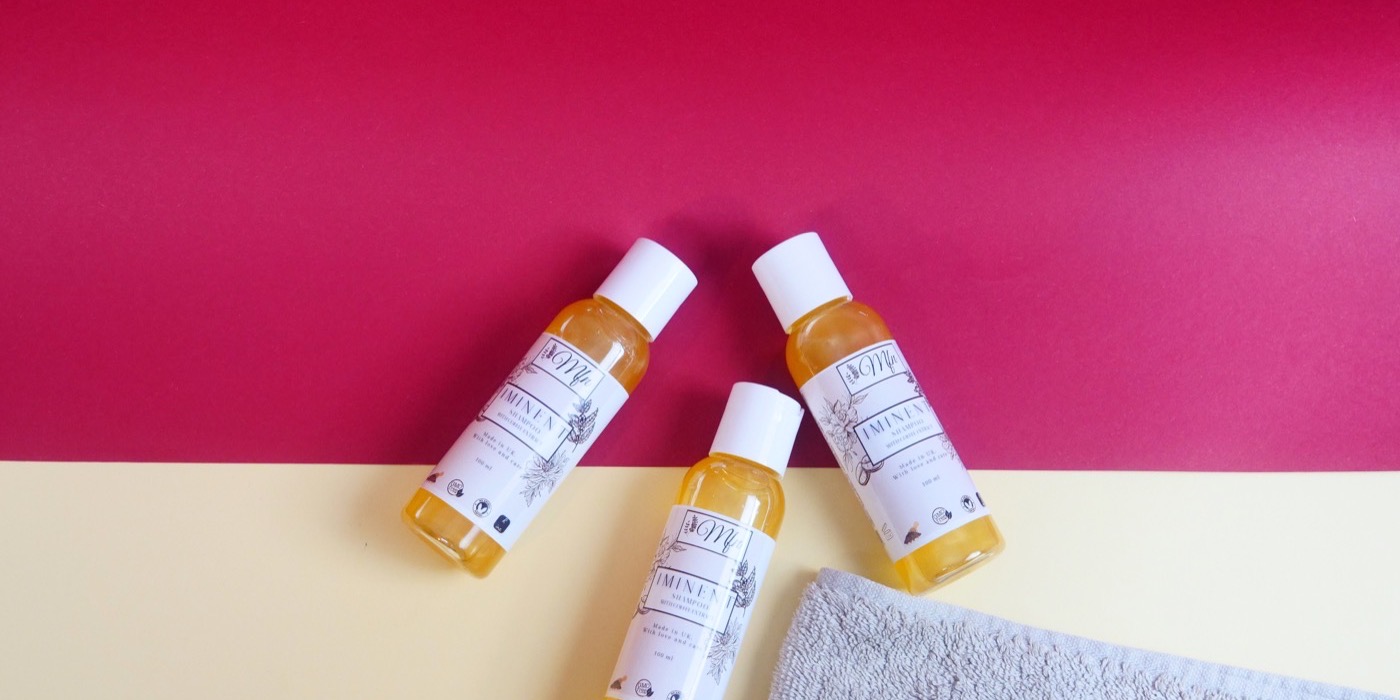
Applied topically, caffeine increases blood circulation at the scalp, which brings more oxygen and nutrients to the follicle. It also appears to counteract some of the effects of DHT, the hormone most associated with pattern hair loss.
That is the reason it appears in our Iminent Shampoo and Conditioner rather than as a marketing word on the front of the bottle.
It will not regrow hair from a follicle that has already closed, and it will not work in a fortnight. Hair grows roughly a centimetre a month, so any honest assessment of a topical product takes months, not weeks.
It also will not counteract the mechanical damage from tight styling. If tension is the cause, no shampoo will fix it.
Massage the shampoo into the scalp rather than the lengths, and give it thirty seconds to sit there before rinsing. Follow with the conditioner on the mid-lengths and ends.
Pair it with the Iminent oil as a weekly scalp treatment. The oil does the nourishing; the caffeine does the stimulating.
Important: this article is general well-being information, not medical advice. It does not diagnose, treat or cure any condition. If you are pregnant, breastfeeding, taking prescription medication or managing a health condition, please speak to your GP or pharmacist before changing anything.
Last reviewed: 14 July 2026 by the Mundo Fit Natural practitioner team. We review our articles at least once a year.
Book a treatment and we will look at your hair properly and tell you honestly what it needs. Or ask Ivy, our 24/7 assistant, for a quick answer.
Keep reading
Too often and you risk thinning at the hairline. Too rarely and the roots matt together. Here is how to find your own interval.
Read articleWhy damp skin matters, how much to use, and why a natural butter behaves differently to a supermarket lotion.
Read articleWhat UK guidance says about vitamin D, where the real gaps usually are, and when a supplement genuinely helps.
Read article